Breath: The simple healing tool we have in every moment.
I have been thinking a lot about breathing lately. There are so many workshops, books, programs, certifications, and retreats built around breath. Teachers, instructors, entire schools of thought. There is, of course, value in going deeper into a practice, but I question whether this simple and accessible practice really requires monetization. Are we making it more difficult, and more expensive, than it needs to be?
Many of the most profound healing practices are, at their core, extraordinarily simple. Breath-centered practices are found in the ritual and philosophic teachings of many ancient spiritual lineages including Taoism, Buddhism, Hinduism, Christianity, Qigong, Shamanism, Sufism, as well as in various Native American cultures. The concepts of these ancient systems were later diluted, branded, and detached from their origins in an effort to appeal to the Western market, trademarked and sold back to us. Somewhere along the way, we separated from our community, and from our innate knowledge of how to heal ourselves.
The Nervous System
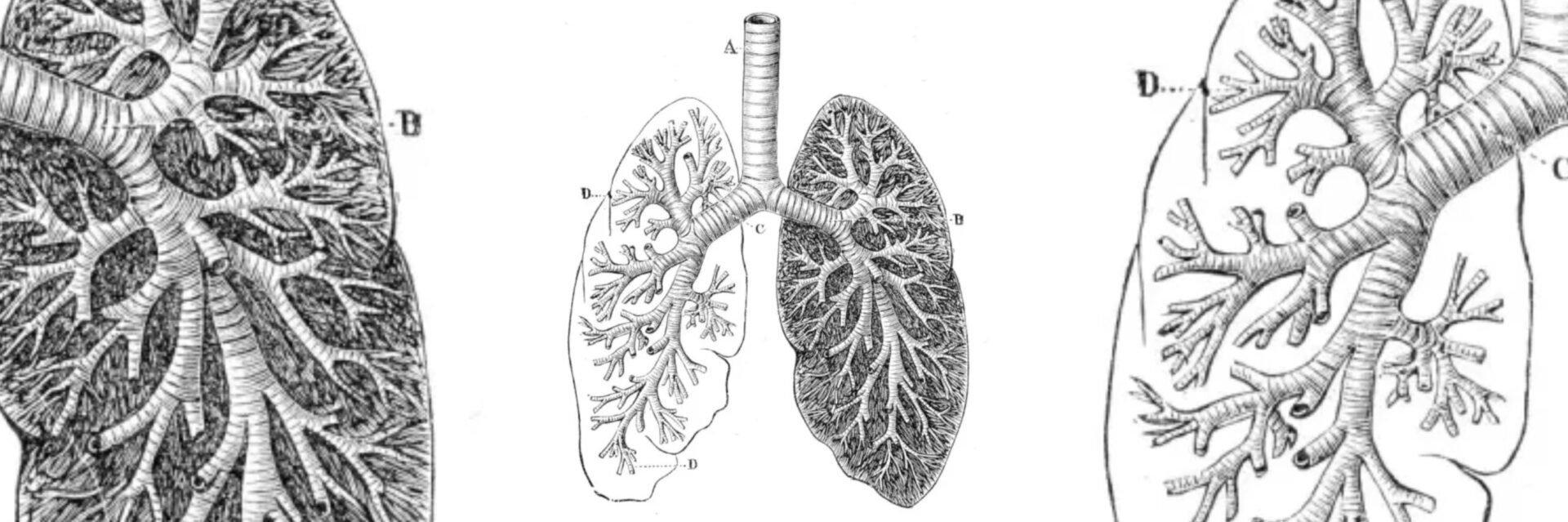
Here is what I find interesting about breath specifically: it is governed by the autonomic nervous system, which means your body will breathe without you having to think about it. Breath shifts depending on your state. In sympathetic arousal, what we think of as fight-or-flight activation, your breathing speeds up and becomes more shallow. In the parasympathetic state, known as rest and digest, your breathing slows, deepens, and becomes more rhythmic. Your body is already adjusting to its needs, all the time, without your input.
What makes breath unusual is that you can also take conscious control of it. Unlike your stomach or your liver, the breath sits right at that crossroads of voluntary and involuntary. In East Asian medicine, the emotions and the organs are considered intimately mapped to each other. The classical text Huangdi Neijing describes a bidirectional relationship between emotion and body, where “the liver is in charge of anger” and “anger damages liver.” This makes me wonder, in a very Eastern medicine kind of way, how much we might also send intention toward our other organs and systems. We are not as separate from our automatic processes as Western medicine has traditionally suggested. But that is a whole other conversation. The point is that this dual nature of breath, both automatic and consciously accessible, gives us a direct line between our conscious mind and our nervous system.
The Research
Modern research keeps confirming what practitioners have known for a very long time. A 2023 meta-analysis in Scientific Reports reviewed twelve randomized controlled trials with 785 adult participants and found that breathwork meaningfully reduced stress and improved mental health outcomes across diverse populations, noting that because breathing acts directly on the autonomic nervous system as a “bottom-up” approach, its benefits are not limited to any particular group (Fincham et al., 2023). A separate study in Cell Reports Medicine found that because heart and lung function are closely synchronized, breath can directly influence the central autonomic network, affecting mood, sleep, and even our capacity for self-regulation, through what researchers call interoception, the body’s ability to sense and process its own internal states (Balban et al., 2023).
Every time a study like this comes out, I think: of course. But in our modern world, we continually need science to say out loud what the body already knows.
Mindfulness
Beyond science, I am also inspired by the profound simplicity of the Buddhist teachings of Thich Nhat Hanh. His practice of mindful breathing begins with this:
“Breathing in, I know I am breathing in. Breathing out, I know I am breathing out.”
Simple, easy, accessible. Full awareness of the in-breath, full awareness of the out-breath. No counting. No timer. No technique to master. As Thich Nhat Hanh wrote: “Conscious breathing is the key to uniting body and mind… regardless of our internal weather, our thoughts, emotions, and perceptions, our breathing is always with us like a faithful friend.” (from Happiness: Essential Mindfulness Practices)
You do not need a box, a count of four, or a teacher. Those are tools, and they are useful, and if they help you, keep them in your toolbox. The foundation is simply allowing yourself to notice your breathing, and to have a full expression of the inhale and a full expression of the exhale. That alone brings you back into your body, offering a pause from the hamster wheel of our minds and bringing you into the present moment.
Techniques
There are other methods worth knowing. Holotropic breathwork uses intensified, connected breathing to move into deeply meditative and sometimes emotionally cathartic states. Box breathing uses equal counts for inhale, hold, exhale, and hold, and has been used by military and athletes to stabilize under pressure. One of my favorite techniques for when I am activated or anxious is the extended exhale: breathe in slowly, then purse your lips gently as if breathing softly through a straw, and let the exhale be twice as long as the inhale. In for four, out for eight. In for three, out for six. Research has found that this kind of extended sigh, a deep breath followed by a longer, slower exhale, is associated with psychological relief, a shift in autonomic state, and a resetting of respiratory rate (Balban et al., 2023). There is something in that long exhale that tells your nervous system the coast is clear. All of these techniques point at the same thing: a return to the body, a break from the mind’s running commentary, an arrival in the present moment.
In Closing
It is wonderful to read a book about breath, to go to a class or listen to a guided meditation. At the same time, breath is free, and is available right now. While you are driving. While you are in a hard conversation. While you are at your desk, deep in focus. While you are reading this. May your breath have ease and fullness.
References and further reading
Balban, M.Y., et al. (2023). Brief structured respiration practices enhance mood and reduce physiological arousal. Cell Reports Medicine. https://www.sciencedirect.com/science/article/pii/S2666379122004748
Fincham, G.W., et al. (2023). Effect of breathwork on stress and mental health: A meta-analysis of randomised-controlled trials. Scientific Reports. https://www.nature.com/articles/s41598-022-27247-y
Lee, J., et al. (2017). Understanding mind-body interaction from the perspective of East Asian medicine. Evidence-Based Complementary and Alternative Medicine. https://onlinelibrary.wiley.com/doi/10.1155/2017/7618419
Thich Nhat Hanh. (2009). Happiness: Essential Mindfulness Practices. Parallax Press.
Zaccaro, A., et al. (2018). How breath-control can change your life: A systematic review on psycho-physiological correlates of slow breathing. Frontiers in Human Neuroscience. https://pmc.ncbi.nlm.nih.gov/articles/PMC6137615/